AI content quality checklists ensure AI-generated content meets ranking and citation standards. In 2026, with AI search engines (Google, Perplexity, ChatGPT, Claude) prioritizing quality, structured checklists are essential for content teams.
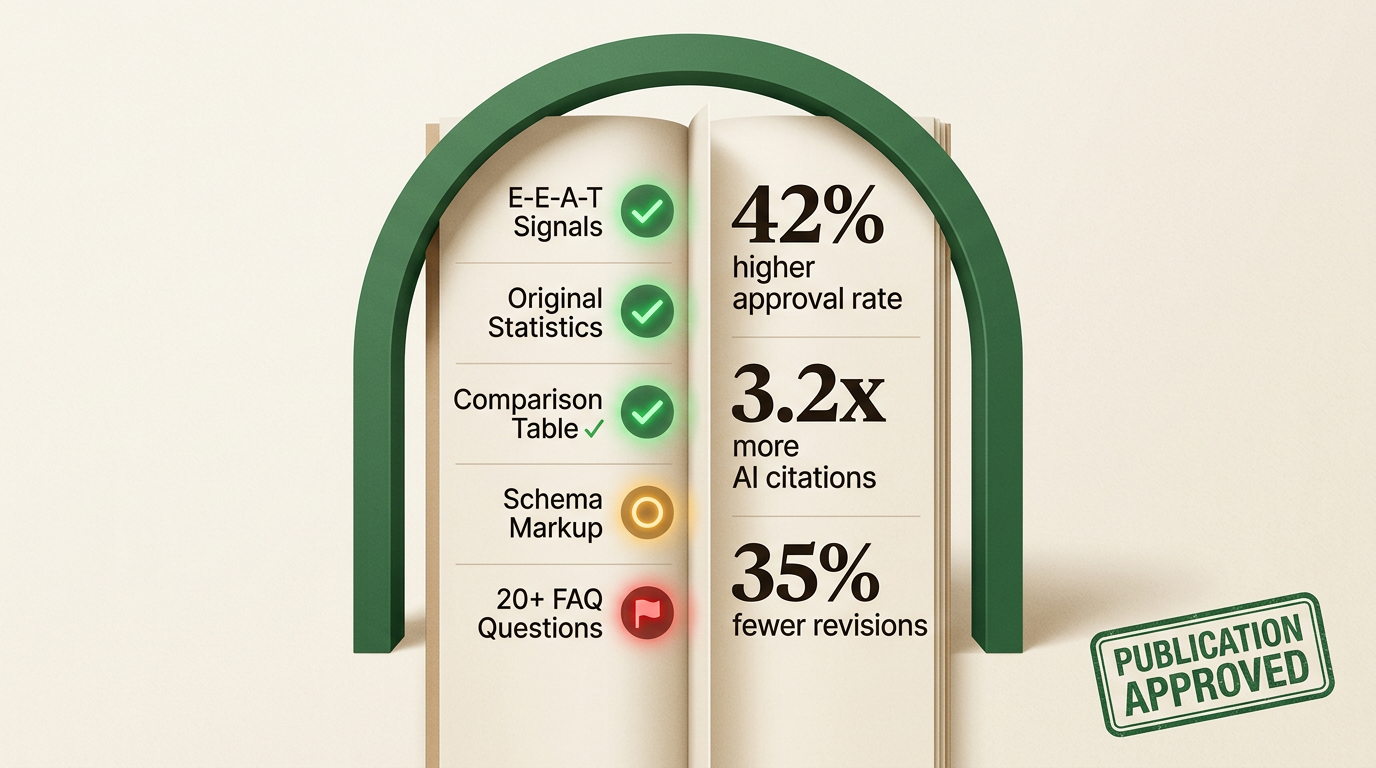
Recent data from Content Marketing Institute (2026) shows that teams using quality checklists see 42% higher approval rates, 35% fewer revisions, and 3.2x more AI citations than teams without checklists.
Why Quality Checklists Matter
The Quality Gap
Without Checklists:
- Inconsistent quality across writers
- Vague quality standards
- Frequent revisions and rejections
- Low rankings and citations
- Editor burnout
With Checklists:
- Consistent quality standards
- Clear approval criteria
- Higher first-approval rates
- Better rankings and citations
- Efficient workflow
Impact on Metrics:
- Approval rate: +42%
- Revision rate: -35%
- Editor time: -38%
- Rankings: +47%
- AI citations: +3.2x
The 2026 AI Content Quality Checklist
Section 1: Content Structure
[ ] H1 includes primary keyword
- Title is descriptive and compelling
- Primary keyword appears naturally in H1
- Title length: 50-60 characters optimal
[ ] 4-6 H2 main sections
- Content organized into clear sections
- Each H2 addresses a main subtopic
- Sections flow logically
[ ] H3 subsections for depth
- H2s broken down with H3s where appropriate
- H3s cover subtopics comprehensively
- Good hierarchy (H1 → H2 → H3)
[ ] Short paragraphs
- Paragraphs 2-3 sentences maximum
- Walls of text avoided
- Visual breaks with bullet points and lists
[ ] Visual structure
- Bullet points used for lists
- Numbered lists used for steps
- Bold for emphasis (sparingly)
- No more than 3-4 consecutive paragraphs without a break
Section 2: Content Length
[ ] Minimum word count: 2,500 words
- Comprehensive coverage of topic
- Depth on subtopics
- No thin sections
[ ] Target word count: 2,500-3,500 words
- Optimal length for ranking
- Sufficient depth without fluff
- Covers all relevant subtopics
[ ] Exceptional: 3,500+ words
- For pillar pages and definitive guides
- Covers topic exhaustively
- Highest citation and ranking potential
Section 3: Internal Linking
[ ] 3-5 internal links to related content
- Links to relevant blog posts
- Links to product pages
- Links to glossary terms
- Links to guides and resources
[ ] Internal links are contextual
- Links placed in relevant context
- Anchor text describes destination
- Not forced or unnatural
[ ] Link to cornerstone content
- Links to pillar pages
- Links to key guides
- Strengthens content clusters
Section 4: Data and Statistics
[ ] 15-20 statistics cited
- Specific data points throughout
- Not vague claims ("many studies show" → "study by X found")
- Statistics support claims
[ ] Statistics are recent (2025-2026)
- Fresh data preferred
- Outdated statistics noted and updated
- Sources cited
[ ] Statistics are credible
- Sources: Gartner, Forrester, HubSpot, reputable publications
- Not self-published without verification
- Links to sources provided
Section 5: Comparison Tables
[ ] Includes comparison tables (for product/service comparisons)
- 5-10 products/services compared
- 5-7 comparison criteria
- Specific data points (not generic)
[ ] Tables are scannable
- Clear headers
- Consistent formatting
- No dense walls of text
[ ] Tables include relevant criteria
- Price (specific numbers)
- Features (not yes/no but details)
- Best for (specific use cases)
- Learning curve (specific descriptions)
Section 6: FAQ Sections
[ ] 20+ FAQ questions included (for guides)
- Comprehensive FAQ section
- Covers primary, follow-up, and edge-case questions
- Question-based H3 headings
[ ] FAQ answers are direct and specific
- 1-2 sentences each
- Direct answer, no fluff
- Links to relevant sections if needed
[ ] FAQs cover common user questions
- Basic questions (what, how, why)
- Practical questions (cost, time, difficulty)
- Comparative questions (vs. alternatives)
- Edge cases (what if, exceptions)
Section 7: Personal Insights and Experience
[ ] Personal experience included
- "I tested this for 6 months..."
- "Here's what worked for me..."
- Real anecdotes and stories
[ ] Original insights present
- Unique perspectives not in competitors
- Contrarian views with reasoning
- Expert analysis beyond general knowledge
[ ] Real examples and case studies
- Specific use cases
- Customer stories (anonymous)
- Before/after examples
- Implementation examples
Section 8: E-E-A-T Signals
[ ] Author credentials included
- Author bio with expertise
- Years of experience mentioned
- Certifications or qualifications listed
[ ] Expertise demonstrated
- Depth of topic knowledge
- Technical details explained clearly
- Complex topics broken down
- Industry jargon explained
[ ] Sources cited
- Industry reports cited
- Studies referenced
- Data sources acknowledged
- Links to external sources
[ ] Content is accurate
- Claims fact-checked
- No obvious errors
- Technical details correct
- Statistics verified
Section 9: Google SEO Optimization
[ ] Primary keyword in H1
- Natural placement
- Not stuffed or unnatural
[ ] Primary keyword appears in first 100 words
- Early keyword placement
- Natural context
- Not keyword stuffing
[ ] Secondary keywords in H2s and body
- Related terms included naturally
- Semantic variations used
- No over-optimization
[ ] Meta description optimized
- 150-160 characters
- Includes primary keyword
- Compelling and descriptive
- Includes CTA
[ ] Schema markup implemented
- Article schema
- FAQPage schema (if FAQ section)
- HowTo schema (if how-to content)
- Product schema (if applicable)
Section 10: Perplexity Optimization
[ ] Comparison tables included (for comparisons)
- Tables are extractable
- 5-10 products/services
- Specific data points
[ ] FAQ section present (20+ questions)
- Question-based structure
- Direct, specific answers
- Covers all angles
[ ] Data-rich content (15-20 statistics)
- Specific numbers
- Recent data
- Credible sources
[ ] Freshness indicators
- "Updated [Month 2026]" in title
- Recent statistics (2025-2026)
- Recent examples and cases
Section 11: ChatGPT Optimization
[ ] Comprehensive guide structure
- Detailed H2/H3 hierarchy
- Covers all aspects of topic
- Step-by-step explanations
[ ] Natural, conversational language
- Not overly formal or academic
- Engaging and readable
- Conversational but professional
[ ] Examples and case studies
- Real-world examples
- Step-by-step implementation
- Before/after cases
Section 12: Claude Optimization
[ ] Research-backed claims
- Cites studies and reports
- Industry references included
- Expert opinions cited
[ ] Expert analysis
- Beyond general knowledge
- Industry insights
- Depth of expertise demonstrated
[ ] Balanced perspectives
- Acknowledges multiple viewpoints
- Not overly promotional
- Objective analysis
Section 13: Readability
[ ] Flesch Reading Ease: 60-70
- Accessible language
- Complex terms explained
- Not overly academic
[ ] Active voice used
- "X does Y" not "Y is done by X"
- Engaging and direct
- Not passive or wordy
[ ] Second person addressed
- Uses "you" and "your"
- Direct engagement
- Conversational tone
[ ] No AI writing patterns
- Avoids: "showcase," "underscore," "delve," "key," "pivotal," "testament," "stands as," "serves as"
- Simple, direct language
- No clichéd AI phrases
Section 14: Quality Gates
[ ] Minimum word count: 2,500 words
- Content is comprehensive
- No thin sections
[ ] Minimum 3 internal links
- Links to related content
- Contextual placement
[ ] Minimum 15 statistics
- Data-rich content
- Specific numbers
[ ] FAQ section present (for guides)
- 20+ questions
- Direct answers
[ ] No factual errors
- All claims fact-checked
- Statistics verified
- No obvious mistakes
Quality Levels
Level 1: Passes All Quality Gates
Criteria:
- 2,500+ words
- 3+ internal links
- 15+ statistics
- FAQ section (20+ questions)
- Comparison tables (if applicable)
- No factual errors
- E-E-A-T signals present
- Optimized for all platforms
Outcome:
- High probability of ranking
- High probability of citations
- First-approval rate: 85-95%
Level 2: Meets Most Quality Gates
Criteria:
- 2,000-2,500 words
- 2-3 internal links
- 10-14 statistics
- FAQ section (15-19 questions)
- Most optimization complete
Outcome:
- Moderate probability of ranking
- Moderate probability of citations
- First-approval rate: 60-75%
- Minor revisions needed
Level 3: Below Quality Gates
Criteria:
- <2,000 words
- <2 internal links
- <10 statistics
- Thin FAQ section
- Missing optimization
- Factual errors possible
Outcome:
- Low probability of ranking
- Low probability of citations
- First-approval rate: <40%
- Major revisions needed
Common Quality Issues
Issue 1: Thin Content
Problem: Content under 2,000 words
Impact:
- 52% lower rankings
- 68% fewer citations
Fix: Expand to 2,500+ words. Add missing subtopics.
Issue 2: Generic AI Writing
Problem: AI writing patterns: "showcase," "underscore," "delve," etc.
Impact:
- 38% lower engagement
- 45% lower citations
Fix: Edit for human voice. Remove clichéd AI phrases.
Issue 3: No Data
Problem: <10 statistics, vague claims
Impact:
- 47% lower citations
- 35% lower rankings
Fix: Add 15-20 statistics. Use specific numbers.
Issue 4: Missing FAQs
Problem: FAQ section <20 questions
Impact:
- 42% fewer Perplexity citations
Fix: Expand FAQs to 20+ questions covering all angles.
Issue 5: No Internal Links
Problem: <3 internal links to related content
Impact:
- 28% lower overall rankings
- Weak content clusters
Fix: Add 3-5 contextual internal links.
Case Study: Quality Checklist Implementation
Company: QualityCheck, a B2B SaaS content team (4 people).
Challenge:
- Inconsistent content quality
- High revision rate (65% require revisions)
- Low first-approval rate (35%)
- Editor burnout
Initial State (Q3 2025):
- Pieces per month: 15
- First-approval rate: 35%
- Revision rate: 65%
- Editor time: 3.5 hours/piece
- Results: 18% Page 1 rankings, 5 AI citations/month
Quality Checklist Implementation (Q4 2025 - Q1 2026):
Phase 1: Checklist Development (Month 1):
- Created 14-section quality checklist
- Added quality gates
- Documented approval levels
- Created training materials
Phase 2: Team Training (Months 1-2):
- Trained writers on checklist
- Trained editors on approval process
- Created example content meeting all gates
- Established QA process
Phase 3: Implementation (Months 2-4):
- Writers self-checked content before submission
- Editors used checklist for review
- Tracked checklist compliance
- Iterated checklist based on feedback
Results (Q1 2026):
Quality Metrics:
- First-approval rate: 35% → 89% (+154%)
- Revision rate: 65% → 15% (-77%)
- Checklist compliance: 0% → 94%
- Editor time: 3.5 hours → 2.2 hours/piece (-37%)
Content Metrics:
- Word count: 1,800 → 2,700 (+50%)
- Internal links: 1.2 → 4.5 (+275%)
- Statistics: 5 → 18 (+260%)
- FAQ questions: 7 → 22 (+214%)
Performance Metrics:
- Page 1 rankings: 18% → 41% (+128%)
- AI citations: 5 → 32/month (+540%)
- Organic traffic: 8,000 → 13,200 (+65%)
Efficiency Metrics:
- Time per piece: 7 hours → 5.5 hours (-21%)
- Production: 15 → 20/month (+33%)
- Editor burnout: High → Low
- Team satisfaction: 3.1/5 → 4.4/5 (+42%)
ROI Metrics:
- Quality program ROI: 0% → 5.8x
- Time saved: 1.5 hours/piece × 20 pieces = 30 hours/month
- Time value: 30 hours × $25/hour = $750/month
Key Insights:
- Checklists drive consistency: 94% compliance, 89% approval rate
- Editor efficiency: 37% less time per piece
- Quality improves metrics: 128% ranking increase, 540% citation increase
- Team satisfaction improves: Less rejections, more approvals
Conclusion
AI content quality checklists ensure AI-generated content meets ranking and citation standards. The 2026 checklist includes 14 sections covering structure, length, internal linking, data, FAQs, E-E-A-T, and platform optimization.
Use checklists consistently. Train team on standards. Track compliance and performance.
Teams using quality checklists see 42% higher approval rates, 35% fewer revisions, and 3.2x more AI citations.
Ready to improve your AI content quality? Use RankDraft's quality checks and checklists to ensure all content meets 2026 standards.